
From 36 years of experience to three minutes of insight: Why Stephan Tournier created HoofScore
For more than three decades, Stephan Tournier kept seeing the same problem.
He saw it in backyard horses and in some of the most valuable competition horses in the world. He saw it across countries, climates and disciplines. He saw it in western riding, show jumping and elite dressage.
The horses changed. The environment changed. The level of competition changed.
The underlying problem kept appearing.
Poor lower-limb balance.
And when that balance was off, Stephan kept seeing the effects travel beyond the hoof, affecting the entire horse. That observation became the foundation for HoofScore. But the story began much earlier.
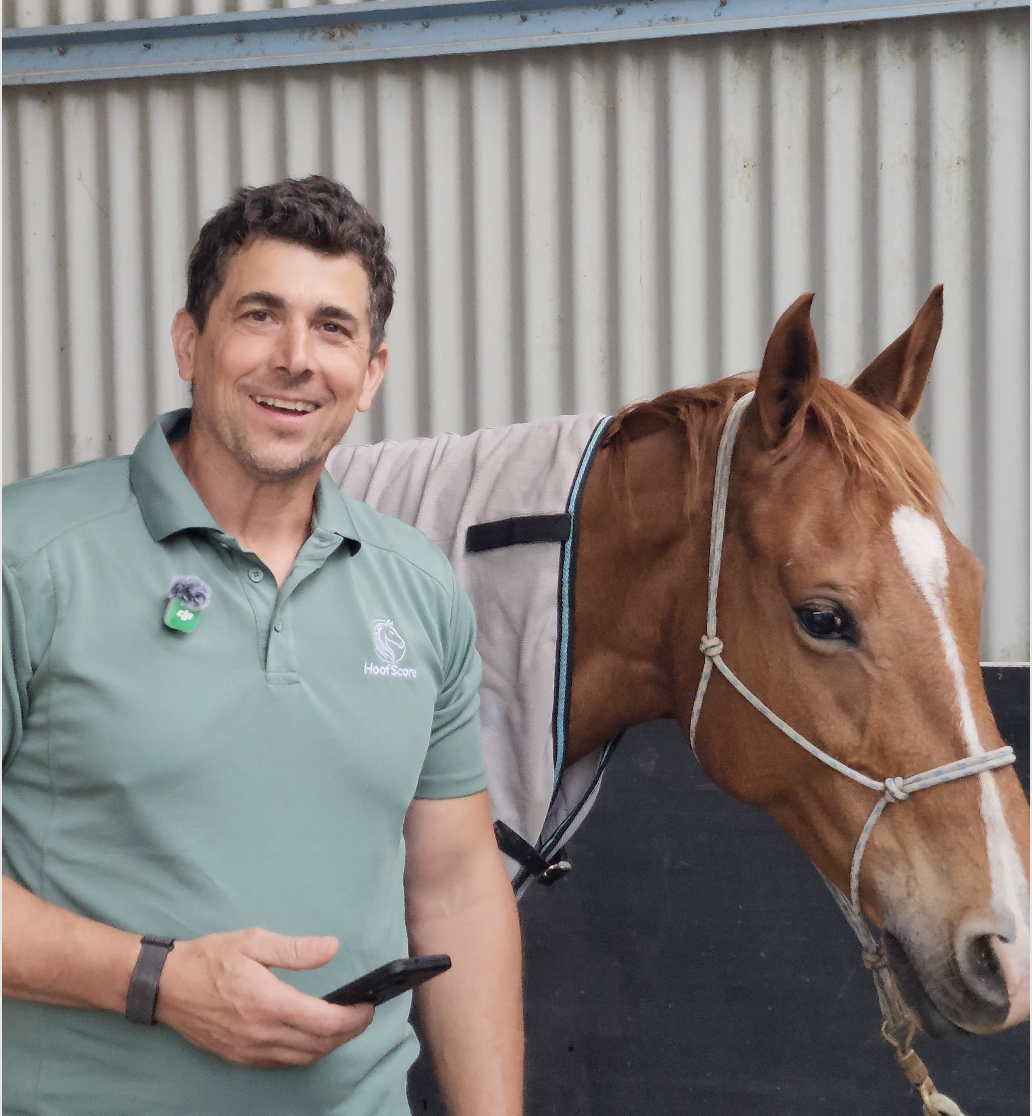
A life built around horses
Stephan has known since early childhood that he wanted to spend his life around horses.
Born in France, he was selected at 16 years old to attend the prestigious École Nationale du Haras du Pin in Normandy, where he completed a three-year traditional farriery program. There, he began learning the principles of equine health and performance that have been refined over literally thousands of years.
One of the most important was also one of the simplest: align the bones.
After completing his training, Stephan served as a farrier with the French cavalry. His career then took him to New Caledonia, where he spent about a decade working with horses and broadening his experience, including exposure to western riding.
In 2003, he moved to California. Stephan’s work in California brought him into the highest levels of equestrian sport. He worked with elite dressage horses during the era of Steffen Peters and Ravel, including the 2008 Beijing and 2012 London Olympic cycles. Across his wider career, he also worked with owners and riders of high-performing horses in other disciplines.
But the elite end of the sport was only part of what shaped his thinking. Stephan also worked with everyday horses in people’s backyards, owned simply for pleasure. Some horses were worth extraordinary sums of money. Others were simply deeply loved by their owners.
What mattered to Stephan was that the same fundamentals kept showing up.
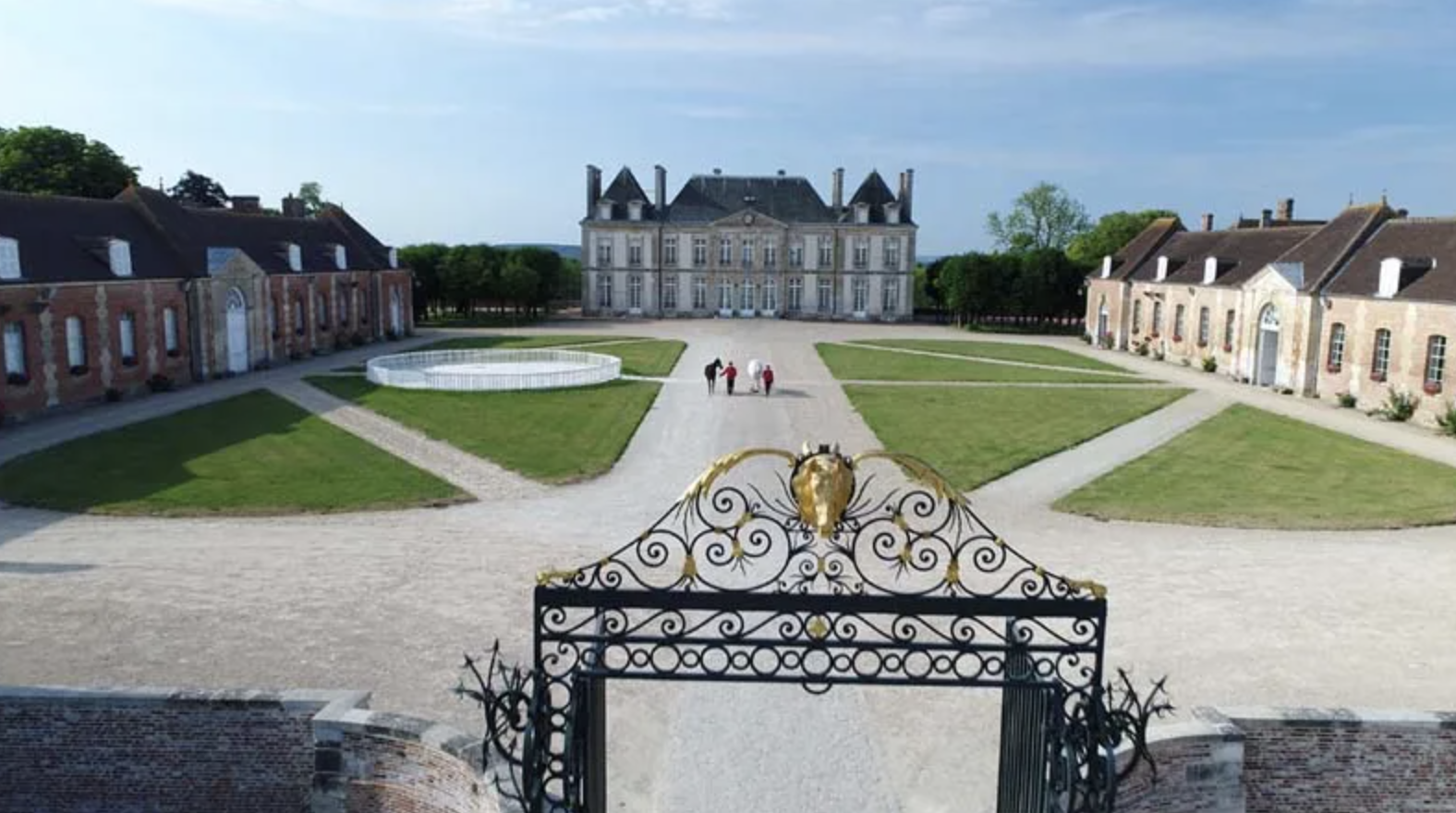
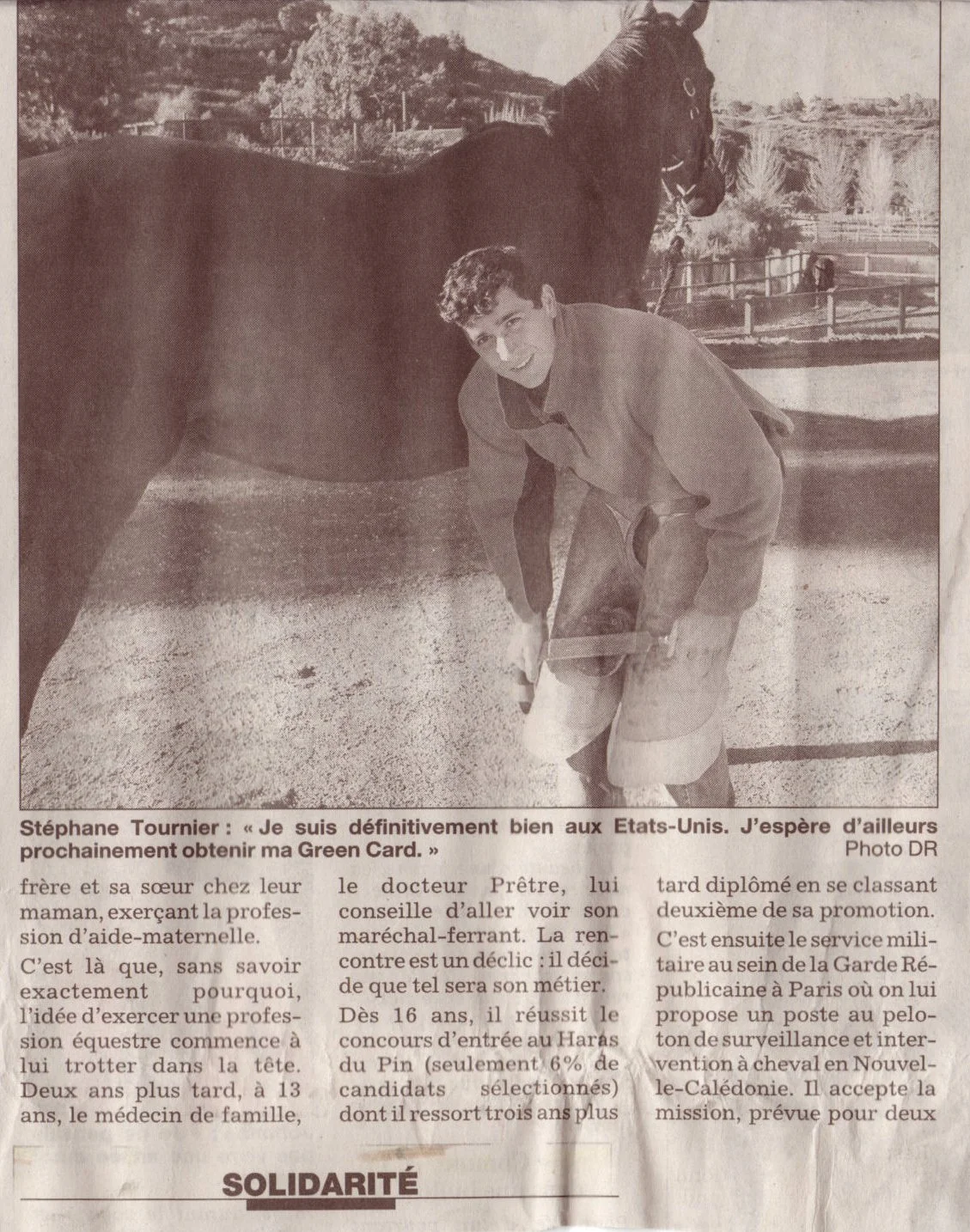
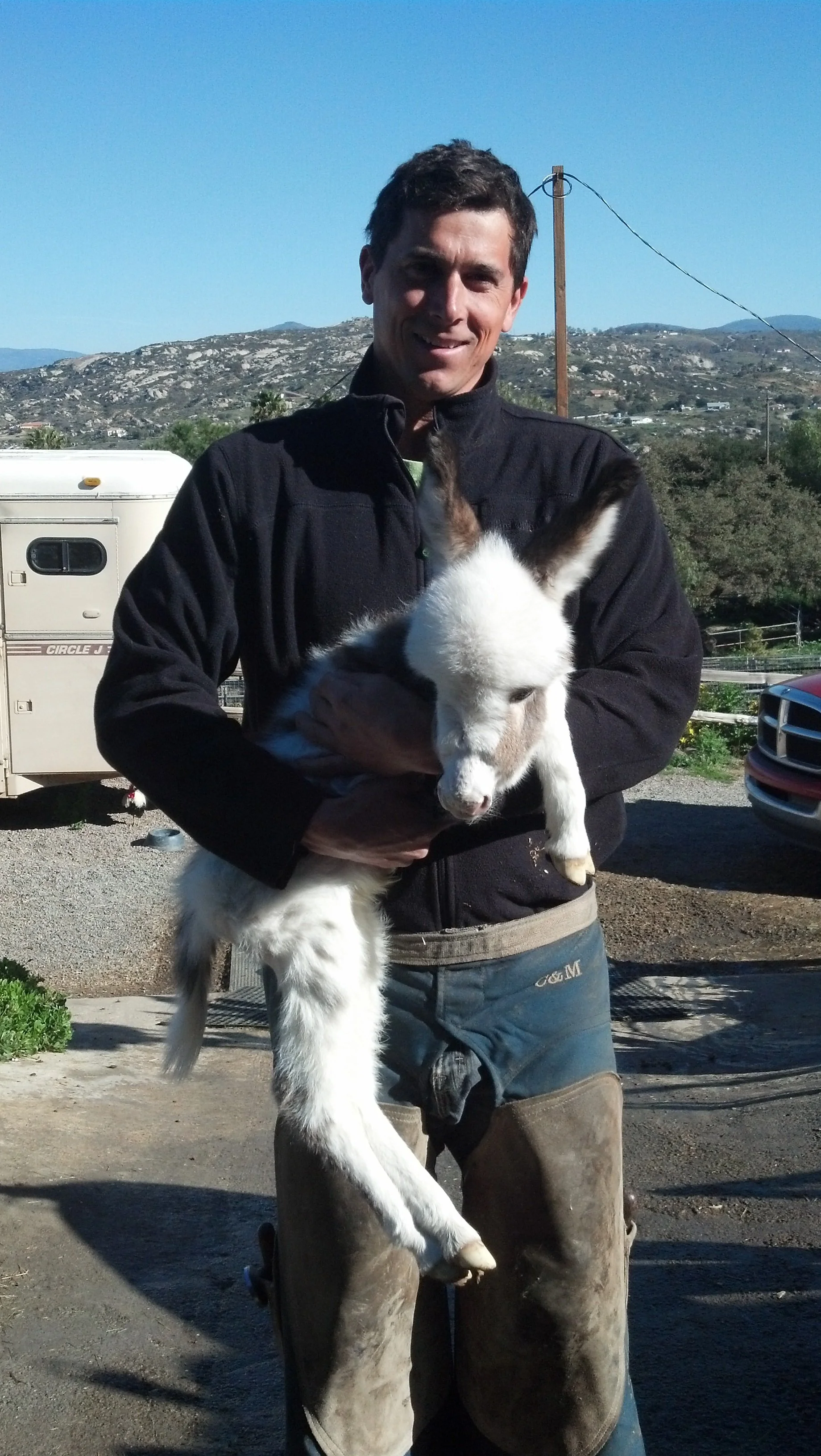
Different horses. The same problem.
The problem is always the same.
A horse’s lower limb differs greatly from a human leg and foot. Horses essentially move on a single digit, with a series of bones and joints that need to work together in alignment. When that lower limb is poorly balanced front to back or side to side, Stephan sees the effect as much more than a hoof problem.
Feet become distorted; the horse compensates.
That is part of what makes horses so remarkable. They continue doing what riders, trainers and owners ask of them. They shift the load. They adapt their movement. They find another way to keep on going. But that ability to compensate also hides the cues about problems when they develop. If a horse is uncomfortable or poorly balanced in one limb, the effects can move through muscles, tendons, hips, back, spine and neck. The longer the imbalance goes unnoticed, the more complex the compensation and long-term the effects can become.
Horses cannot explain what they are feeling.
An astute rider may notice the subtle change in gait, demeanour, or performance. Or they may not. A horse with a high pain tolerance can keep working while the underlying issue becomes progressively harder to ignore. That matters deeply to Stephan.
“These horses don’t ask to do all of this.
People choose to ride them, train them, compete with them and ask them to perform. For Stephan, that creates a responsibility to keep them as comfortable, balanced and pain-free as possible.
The hoof is part of the whole horse
Traditional farriery gives a skilled professional many ways to assess the foot.
Stephan spent decades refining those skills. He trained his eye. He used gauges and compasses. He measured angles and relationships. He looked at how the hoof capsule sat beneath the leg and how changes made at ground level affected the structures above it.
But his thinking increasingly centred on one principle.
The foot belongs to a leg, and the leg belongs to a horse. You cannot manage the hoof in isolation.
Stephan became particularly interested in the measurable relationships between the hoof, pastern and fetlock. Small changes at the foot can create much larger changes in how the lower limb sits and moves.
Over years of observation and measurement, he developed a repeatable way of interpreting those relationships. For an experienced farrier, much of that assessment becomes instinctive. After thousands of horses and decades of work, if you keep great notes, you can prove what's difficult to explain to someone who hasn't spent a lifetime training their eye.
That created another problem for Stephan. How do you put 30-plus years of judgement into someone else's hands?
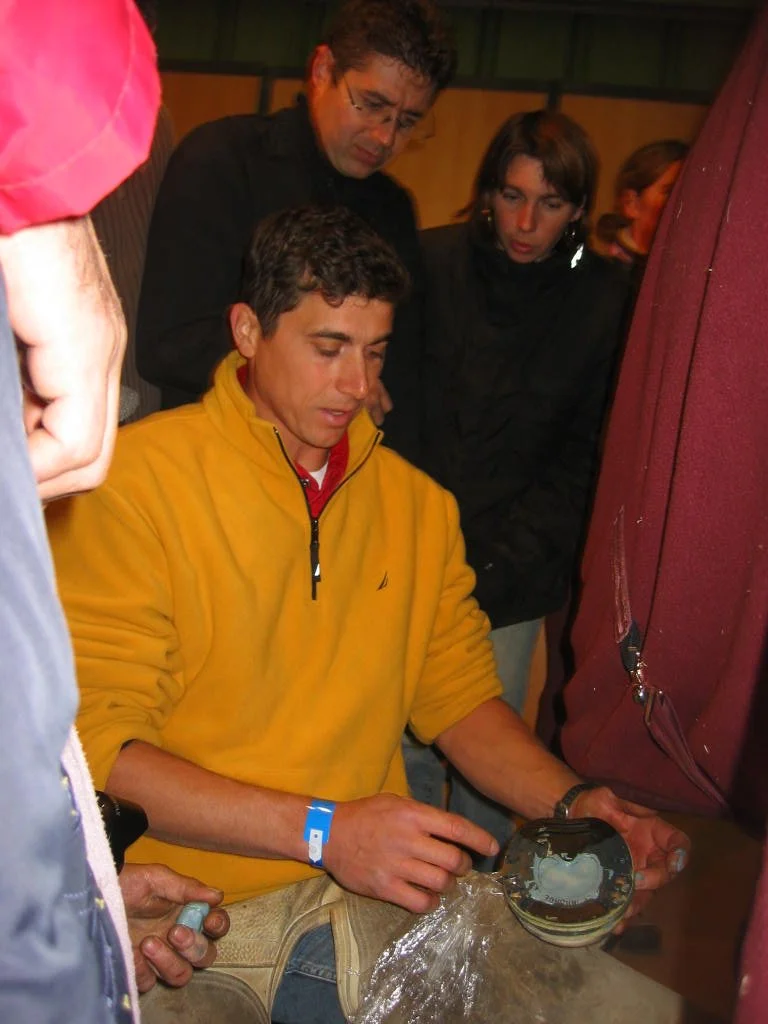
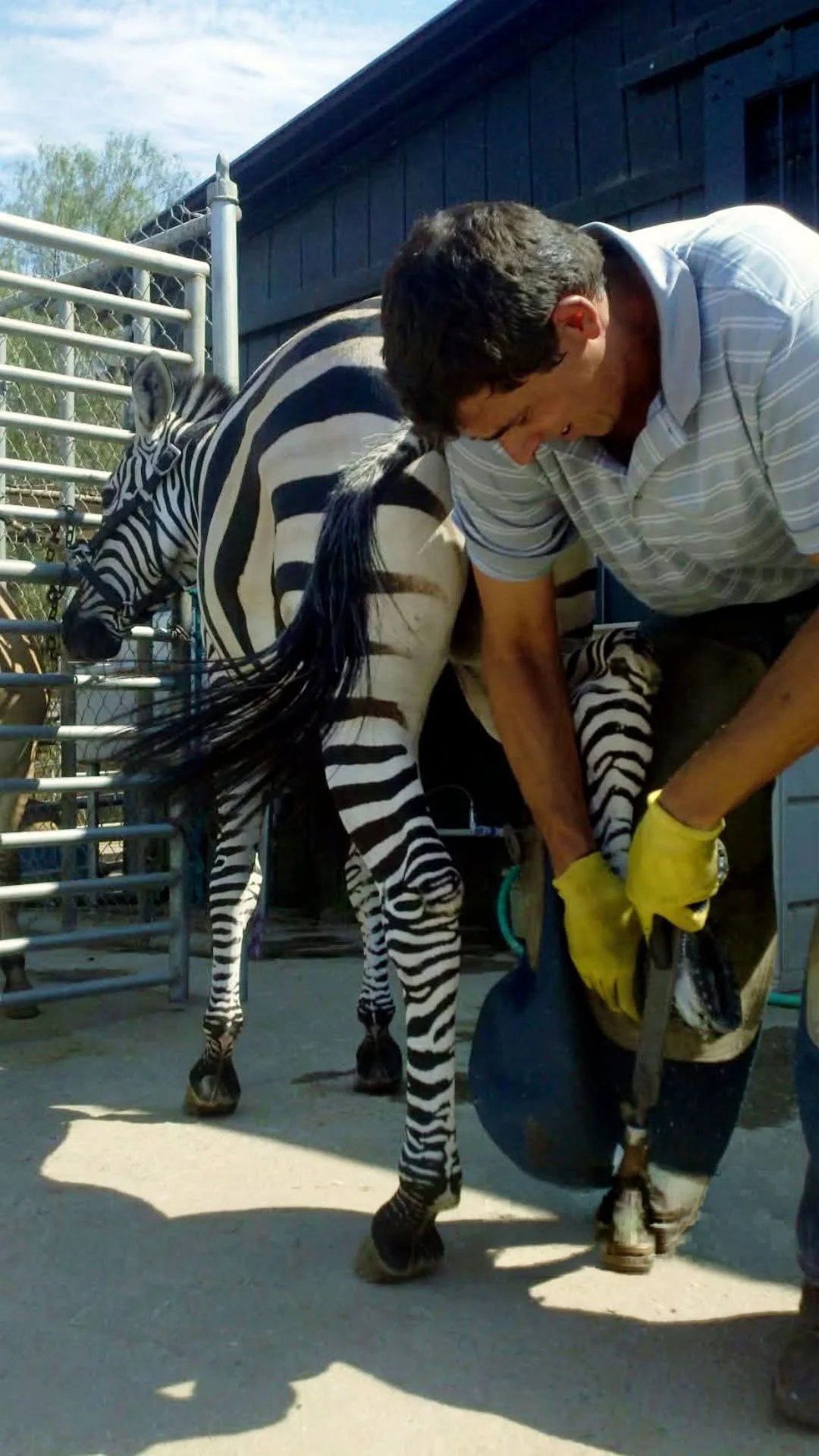
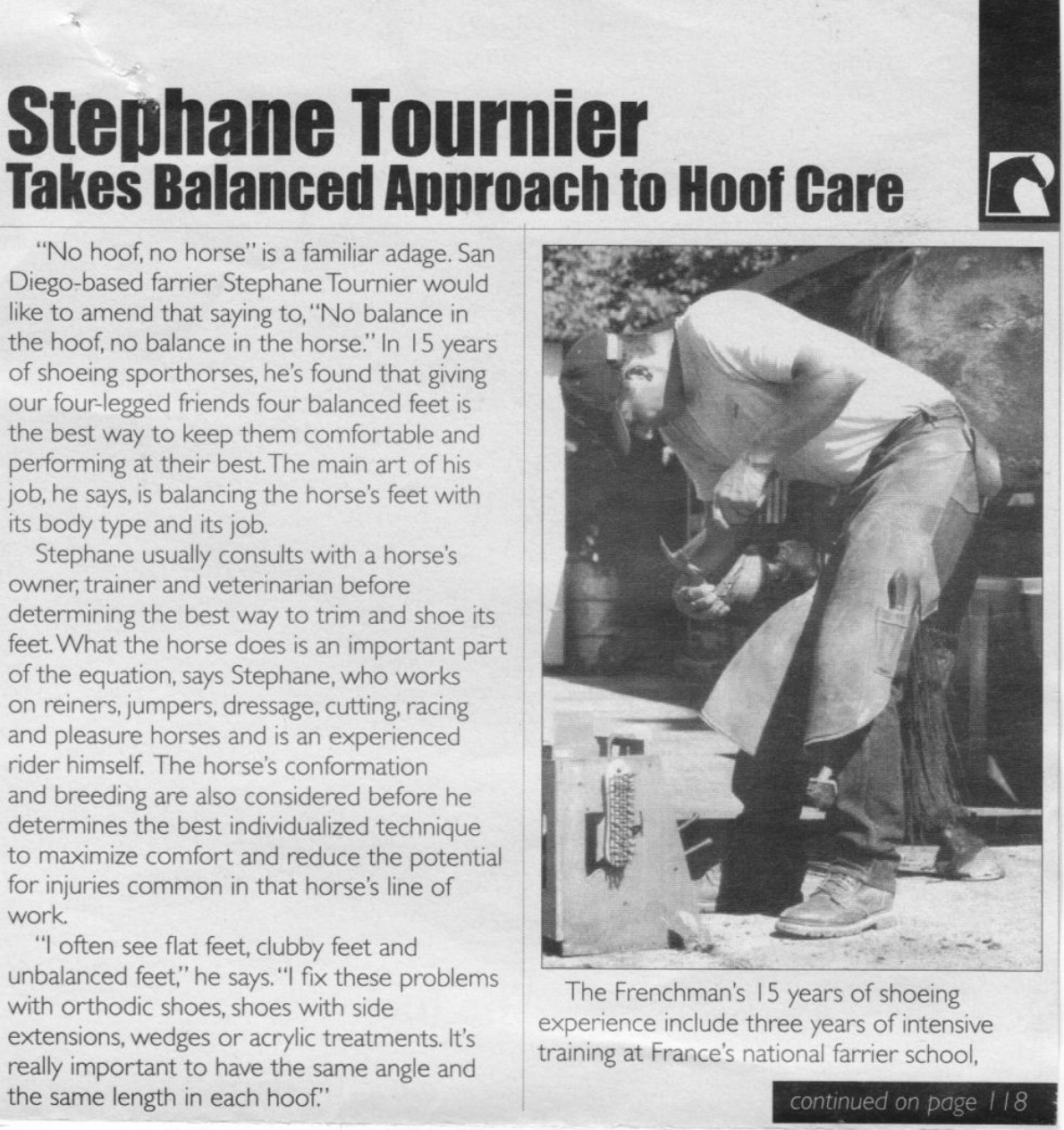
Even the best-trained eye is still human
Stephan trusted his experience, but he also understood its limitations. Human measurement is never perfectly consistent. The hairline can change where a reference point appears to be. The way a horse is weighting a leg can influence what you see. Perspective really matters. And your eyes are not at ground level. Even manual gauges vary slightly from one reading to the next.
Beyond that, people get tired. People get busy. People make mistakes. As Stephan puts it, “you are not necessarily as fresh at four o’clock on Friday afternoon as you were on Monday morning”.
For generations, trained observation and manual measurements were the best tools available. But Stephan wanted something that could apply the same process the same way every time. Something that could measure from the best perspective. Something that would not get tired. Something that could take what he had learned to see and turn it into information an owner could understand almost immediately.
An old problem waiting for new technology
Stephan began seriously exploring a technology solution in 2018. The concept was already clear in his mind. Capture images of the horse, analyse the relationships he had spent decades measuring manually, and return useful feedback quickly enough to help an owner or professional make a better decision. At the time, the technology simply could not do it well enough. So the idea had to wait.
The problem did not. Stephan kept working with horses. He kept measuring. He kept refining the method and thinking about how the relationships he could see might eventually be captured more consistently. Then the technology caught up. Advances in machine learning and image analysis created the opportunity to turn the methodology into something that could be measured automatically from images taken with a normal phone. The goal was now to make the measurements objective, consistent and repeatable. For everyone.
Turning 36 years of judgement into something anyone can understand
HoofScore takes images of the horse and analyses key lower-limb relationships using the measurement approach Stephan has refined through his career. The output is designed to be useful to people who do not have this background.
Pictures. Measurements. Scores. Plain-language context and recommendations.
For Stephan, that matters almost as much as the measurement itself. He has spent years trying to explain to owners what he can see when he looks at a horse. Sometimes that requires long conversations, diagrams or demonstrations. The challenge is not that owners do not care. It is that decades of specialist knowledge are difficult to transfer in a conversation beside a horse. HoofScore gives everyone something concrete to look at.
“A fact is a fact.”
Instead of asking an owner to ‘imagine what is happening’ inside the hoof and lower limb, Stephan can show them the same information he is seeing. That changes the conversation around equine health management entirely.
The moment HoofScore surprised Stephan
HoofScore had spent about a year in progressive testing and refinement on real horses. The measurement accuracy was refined. The language had been simplified. The recommendations were made progressively clearer and more actionable.
And during that process, Stephan reached an unexpected conclusion. The software had become more accurate at this measurement and interpretation process than he was. That is a significant statement from someone who has spent 36 years training his eye and refining the assessment process. His reaction during testing in early 2026:
“Oh my god, this is better than me!”
The reason is not that technology suddenly understands horses better than an experienced farrier or vet. It is that, for this specific measurement task, technology can remove sources of human variation. HoofScore does not get tired. It does not change its approach at the end of a long week. It can analyse images from the required perspective and apply the same measurement logic consistently. For Stephan, that was the real breakthrough. The knowledge no longer had to stay in his head!
Proof, not feelings
Horse care will always involve judgement, experience and feel. HoofScore isn't meant to remove those things, and it certainly isn't meant to replace farriers, veterinarians, trainers, or other professionals. It adds something they have not previously had access to. Objective proof that can be shared and tracked.
An owner can scan a horse and establish a baseline
A farrier can make a correction and prove the outcome
The horse can be regularly scanned again
Instead of relying only on whether something looks or feels better, you can measure the change. For owners, that creates clarity and confidence. For farriers and other professionals, it creates a way to demonstrate progress and communicate with owners more easily. For the horse’s wider care team, it creates a common reference point. That is the part Stephan believes will change everyday horse care.
From sound or lame to everything in between
Stephan has always been particularly interested in what happens before a horse becomes lame. Traditional thinking can make horse health appear binary. The horse is sound, or the horse is lame. But a great deal happens between those two ends of the spectrum.
Balance changes. Movement changes. The horse compensates. If you know what to look for, then symptoms appear well before a major problem is obvious. Stephan compares it to the warning lights in a modern car. An orange warning light does not mean the car is broken. It means something requires attention. Horses do not come with an orange warning light.
HoofScore is intended to give owners and professionals another way to notice change early, monitor it over time and decide when action is needed. Not after the horse has broken down. Not after it is suffering significant pain. Before.
That is where Stephan sees the greatest value. Better information means earlier intervention, better conversations with professionals, less avoidable discomfort and fewer problems being allowed to progress simply because nobody had a clear way to measure and articulate what was changing.
Making specialist insights available to all
There are practical limits to what one person can do. Stephan can only work personally with so many horses, trainers, and riders. For years, people have sent him photographs and asked what he can see. They are seeking to access the judgement he has developed over a lifetime. HoofScore changes the scale of that.
It gives owners access to a consistent measurement process without Stephan needing to stand beside every horse. That does not make every owner a farrier. But it gives every owner better information to take into decisions they make about their horse. It also gives professionals a clearer way to work from the same foundation of evidence. For Stephan, this is where thousands of years of traditional farriery, decades of personal experience, and cutting-edge technology finally meet.
The goal is simple
Underneath the software, the measurements and the technology, Stephan’s motivation is straightforward. He does not want horses living with avoidable discomfort simply because poor balance was not recognised or rectified early enough.
He wants owners to have more than feelings and intuition. He wants them to have evidence.
He wants horse owners, riders, trainers, farriers and other care professionals to be able to measure, monitor and improve lower-limb balance over time.
And ultimately, he wants HoofScore to become a widely understood measure of lower-limb balance quality.
A common language for the people caring for the horse
A way to see more of what is happening between sound and lame
A way to take specialist knowledge that once lived inside one person’s head and make it available wherever a horse and a smartphone can come together
When asked what he ultimately wants HoofScore to achieve, Stephan does not make it complicated.
“I want to eliminate bad balance.”
With HoofScore, the technology now exists to recognise preventable problems earlier, make better decisions and help horses stay more comfortable; there is no reason not to use it.